Travel Guide in Hawaii — Getting Around the Islands
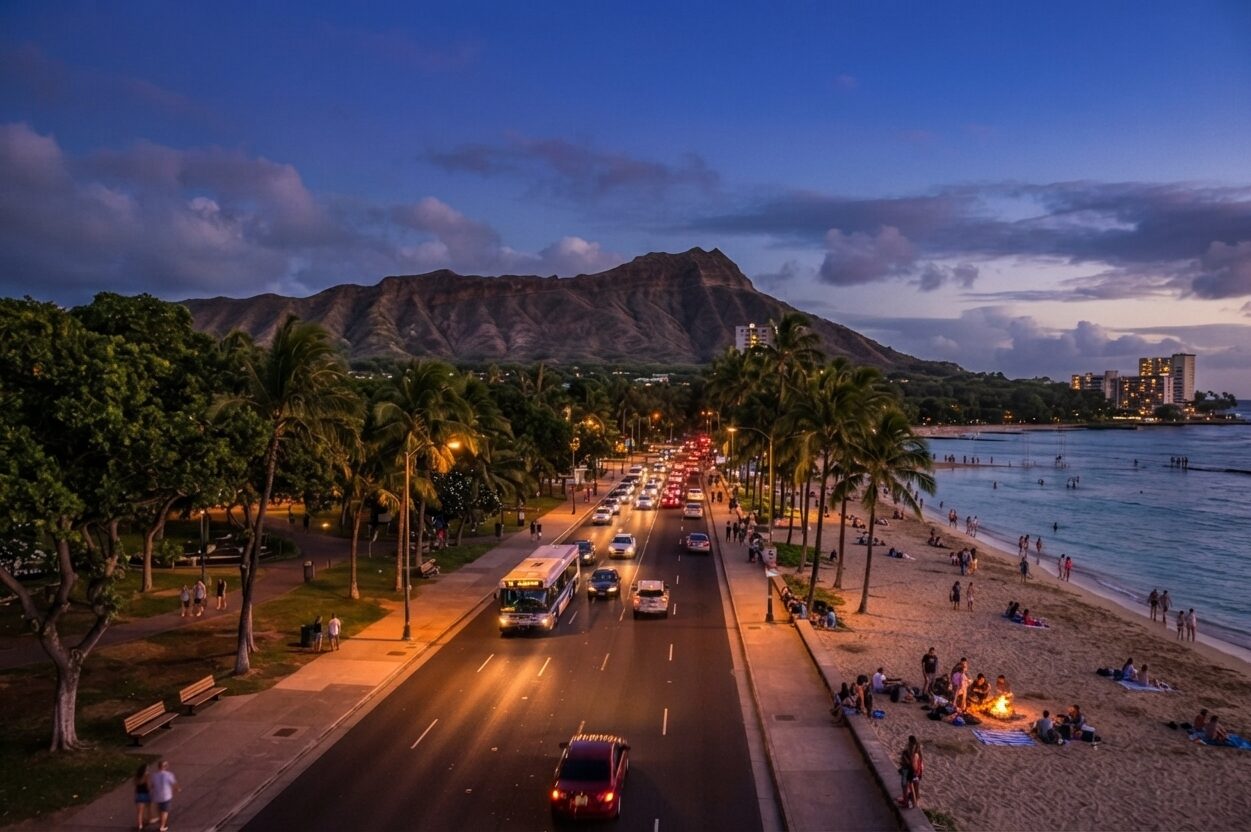
- Renting a car is close to essential on every main island except for a short Waikīkī-only stay on Oʻahu.
- Inter-island travel means a short flight — there are no car ferries between the main Hawaiian Islands.
- Weather and driving conditions vary sharply by coast — windward (east) sides are wetter, leeward (west) sides drier and sunnier.
- Plan logistics island by island: Oʻahu, Maui, Kauaʻi, Big Island.
This page is about the mechanics of moving through Hawaiʻi once you've landed — not which beach to visit, but how you'll actually get there. Getting around Hawaiʻi looks nothing like getting around a mainland US road trip. There's no driving between islands, public transit is thin outside Honolulu, and some roads are genuinely one-lane with waterfalls crossing them. Here's what actually works.
Introduction to Hawaii
Overview of Hawaii as a Travel Destination
Hawaiʻi is a chain of volcanic islands roughly 2,400 miles from the US mainland, geographically isolated in a way that shapes logistics more than most travelers expect. Getting between islands always means a flight, never a bridge or a ferry line (a few small passenger ferries exist for short hops like Maui-to-Lānaʻi, but nothing links the four main islands). The Hawaiian Islands span a surprising range of terrain in a small footprint — rainforest, desert, alpine summit, black-sand coast — often within one island's borders.
Exploring the Hawaiian Islands
Unique Features of Each Hawaiian Island
Maui's signature drive, the Road to Hana, takes 2.5-3 hours one way along a narrow, curving coastal road with more than 600 curves and 50-plus one-lane bridges — budget a full day, not an afternoon. Hawaiʻi Island (the Big Island) covers such a range of climates that driving from Kona to the Mauna Kea summit crosses from beach weather to near-freezing temperatures in about two hours. Oʻahu is the most road-friendly of the four, with a real highway system (the H-1, H-2, H-3) connecting Honolulu to the North Shore and windward towns. Kauaʻi's roads simply stop at the Nā Pali Coast — no road circles the island, since the cliffs there are impassable by car.
Travel Logistics and Accommodations
Where to Stay and Getting Around in Hawaii
Honolulu offers the widest hotel range on any island, from budget hostels to five-star towers, almost all walkable to Waikīkī Beach. On Maui and the Big Island, staying resort-side (Kaʻanapali/Wailea or Kona-side) puts you near restaurants and beaches without much driving; staying inland saves money but usually means a car is non-negotiable. Renting a vehicle is worth doing on every island except a Waikīkī-only Oʻahu stay — TheBus system there is genuinely serviceable for a beach-and-city trip. Elsewhere, public transport exists but runs infrequently and won't reach most trailheads or remote beaches.
| Island | Car Needed? | Notable Driving Challenge |
|---|---|---|
| Oʻahu | Optional in Waikīkī, recommended elsewhere | Honolulu rush-hour traffic |
| Maui | Yes | Road to Hana's curves and one-lane bridges |
| Kauaʻi | Yes | Single-lane bridges on the north shore |
| Big Island | Yes | Saddle Road's elevation and weather shifts |
Activities and Experiences
Top Activities and Experiences in Hawaii
Hawaiʻi Volcanoes National Park on the Big Island protects Kīlauea, one of the world's most active volcanoes, and its crater rim trails stay open (conditions permitting) even during periods of visible activity — check current status at nps.gov before you go. Maui's water sports scene runs from beginner snorkeling at Kaʻanapali to serious windsurfing off Hoʻokipa Beach. Kauaʻi's Kalalau Trail along the Nā Pali Coast ranks among the most demanding — and rewarding — day hikes in the state; permits are required beyond the first two miles.
Cultural and Historical Insights
Cultural and Historical Sites to Visit
Honolulu holds most of the state's deepest historical sites within easy reach of each other: 'Iolani Palace, Pearl Harbor's memorials, and the Bishop Museum's collection of Hawaiian and Pacific artifacts. Oʻahu's cultural calendar includes hula performances, lei-making demonstrations, and community events that are far more accessible logistically than similar events on the neighbor islands, simply because of the road network and hotel density around them.
Practical Travel Tips
Seasonal Travel Considerations
Peak seasons — mid-December through mid-January, and June through August — bring higher prices, fuller flights, and busier roads and trailheads. Shoulder months (April-May, September-October) usually mean lighter traffic on the Road to Hana and easier parking at trailheads, plus better hotel rates. Winter swells (roughly November-March) make some North Shore and Kauaʻi beaches dangerous for swimming even when they're spectacular to watch.
Environmental and Conservation Efforts
Hawaiʻi Volcanoes National Park and several other protected areas run active conservation programs, and a growing number of trails and reef sites now cap daily visitor numbers or require reservations. Stick to marked trails, use reef-safe sunscreen, and don't touch or stand on coral — reef damage from sunscreen chemicals and careless snorkeling is a real, ongoing problem the state is actively trying to address.
- Fill up on gas before heading toward remote areas — stations thin out fast past resort zones, especially on the Big Island and Kauaʻi's north shore.
- Download offline maps before driving the Road to Hana or Saddle Road — cell service drops out in long stretches.
- Check surf and weather advisories daily if you plan to swim, snorkel, or hike near the coast.
For deeper island-by-island detail, see Maui Travel Guide, Oahu Travel Guide, and Kauai Travel Guide. For the bigger planning picture — flights, budgets, timing — start at Plan a Trip to Hawaii or our State of Hawaii Travel Guide for an all-islands overview.
What do I wish I knew before going to Hawaii?
That distances that look short on a map take much longer to drive than expected, thanks to narrow roads, one-lane bridges, and traffic in and around Honolulu. Build in more buffer time than you think you need.
Is $1000 enough for a week in Hawaii?
For one budget traveler using a bike or bus and skipping a rental car, it's workable on a single island like Oʻahu. For two people needing a car to get around Maui, Kauaʻi, or the Big Island, it's tight once gas, parking, and car rental costs are added.
Where should first-timers go in Hawaii?
Oʻahu tends to be the easiest for getting around, given its real highway network and public bus system — a good pick if you want fewer logistics to manage on a first trip.