Travel Guide for Hawaii — Best Guide Books Compared
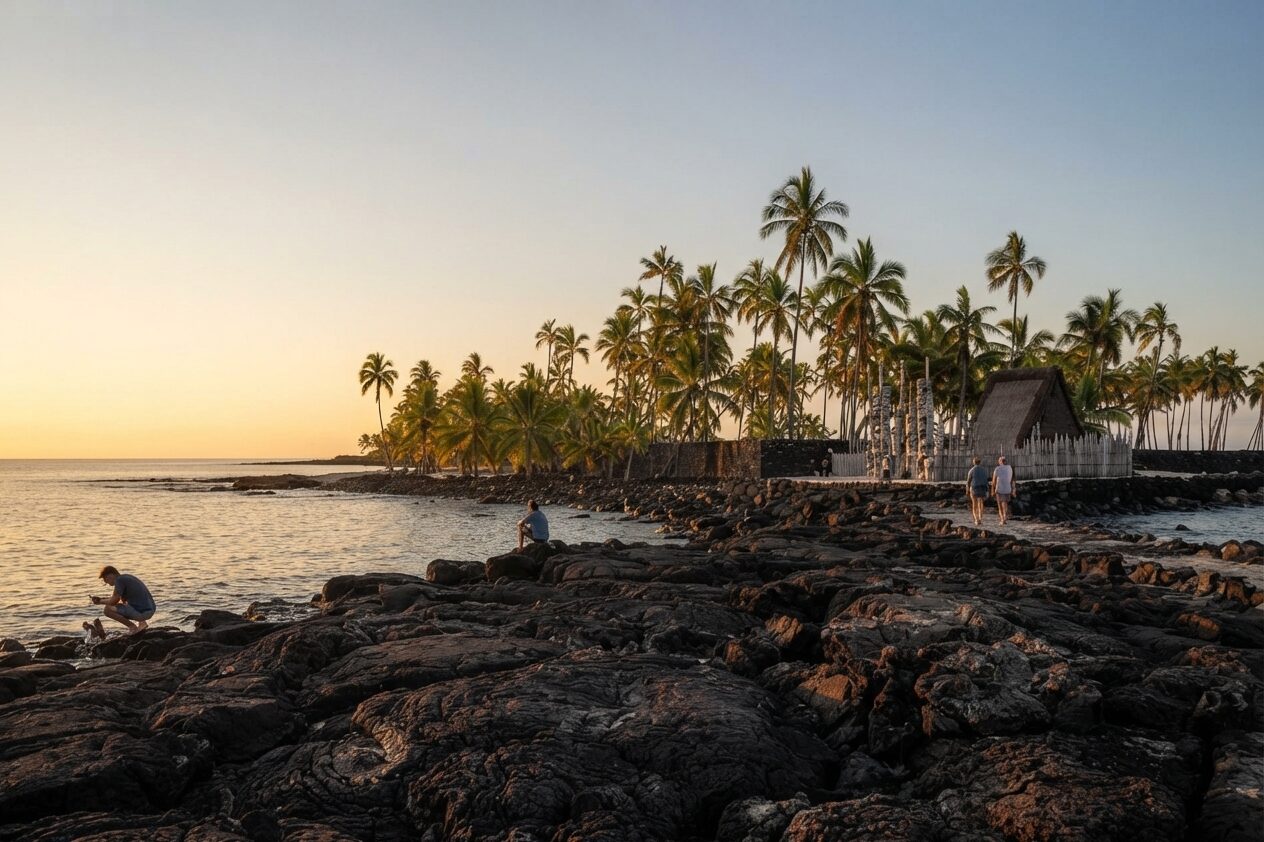
- A good print or digital guide book still earns its keep in Hawaiʻi, especially for offline maps in areas with weak cell signal.
- Lonely Planet, Rick Steves, Fodor's, Frommer's, and DK Eyewitness each take a different approach — see the comparison table below.
- Beyond the book, this page covers the islands, culture, and logistics a good guide should walk you through — see our Hawaii Guidebook Reviews hub for full breakdowns of each title.
- Pair whichever guide book you choose with our own Plan a Trip to Hawaii pages for up-to-date planning.
Plenty of people ask for "a travel guide for Hawaii" and mean something specific: an actual book, something they can flip through on the plane or stuff in a backpack pocket with no signal required. This page covers both — a real comparison of the guide books worth buying, and the core island, culture, and logistics information any good one should cover. Think of it as the "which book, and why" companion to our broader Hawaii Travel Guide homepage.
Introduction to Hawaiʻi
Overview of Hawaiʻi as a Travel Destination
Hawaiʻi is a volcanic island chain roughly 2,400 miles from the US mainland, made up of eight main islands though visitors typically focus on four: Oʻahu, Maui, Kauaʻi, and the Island of Hawaiʻi (the Big Island). Climate, landscape, and culture shift noticeably between them — this is exactly the kind of nuance a decent guide book should flag before you land, rather than after you've booked the wrong side of an island.
Exploring the Islands
Discovering the Island of Hawaiʻi
The Big Island is the youngest and largest of the main islands, still growing where Kīlauea's lava reaches the sea inside Hawaiʻi Volcanoes National Park. Any guide worth its price should flag both Kona (dry, sunny, resort-heavy) and Hilo (wet, green, low-key) as genuinely different bases for a stay.
Highlights of Maui
Maui's Road to Hana and Haleakalā's 10,023-foot summit are the two set pieces most guide books lead with, and for good reason — both need real planning (permits for Haleakalā sunrise, a full day for Hana) that a spontaneous traveler easily misses.
Oʻahu and Honolulu: The Heart of Hawaiʻi
Honolulu concentrates history (Pearl Harbor, 'Iolani Palace), nightlife, and Waikīkī Beach within a small, walkable area — the easiest island for a guide book to cover well since so much sits close together.
Kauaʻi: The Garden Isle
Kauaʻi is the oldest of the main islands, eroded into the dramatic Nā Pali Coast and Waimea Canyon. Good guide books here earn their keep by explaining permit systems for the Kalalau Trail, since demand outstrips supply most of the year.
Travel Logistics and Timing
Best Time to Visit Hawaiʻi
Shoulder months — April-May and September-October — usually bring the best mix of good weather, thinner crowds, and lower prices. Winter (roughly December-March) adds whale-watching off Maui and the Big Island but higher rates and more windward rain; a solid guide book should give you both sides of that trade-off, not just the marketing version.
Cultural and Culinary Experiences
Arts and Culture in Hawaiʻi
Hula, slack-key guitar, lei-making, and outrigger canoe paddling all carry real depth behind them — the Merrie Monarch Festival on the Big Island each spring is the single best example, a serious hula competition, not a tourist show. A good guide should point you toward community events over hotel luaus, at least as an option.
Savoring Hawaiʻi Regional Cuisine
Poke, loco moco, and plate lunch reflect Hawaiʻi's mixed Native Hawaiian, Japanese, Chinese, Filipino, and Portuguese food heritage. Farmers markets on every island are usually a better bet for trying local produce than a hotel restaurant menu.
Choosing the Right Hawaii Guide Book
Print guide books have lost ground to apps and blogs, but they still solve one real problem: they work with no signal, no battery anxiety, and no algorithm deciding what you see. Here's how the major series compare, generally speaking — specific editions vary, so check publication dates before buying.
| Guide Book | Best For | Style |
|---|---|---|
| Lonely Planet Hawaii | Independent travelers, backpackers | Practical, budget-aware, detailed logistics |
| Rick Steves Hawaii | First-timers wanting curated picks | Opinionated, approachable, fewer options but well-vetted |
| Fodor's Hawaii | Comfort travelers, resort-goers | Broad coverage, dining and hotel-forward |
| Frommer's Hawaii | Value-conscious travelers | Straightforward, budget tiers clearly marked |
| DK Eyewitness Hawaii | Visual planners, families | Heavy on maps, illustrations, and cutaways |
- Lonely Planet tends to go deepest on logistics — bus routes, camping permits, trail conditions.
- Rick Steves works well if you want fewer decisions and trust the author's curation.
- DK Eyewitness suits visual planners and families who like maps more than paragraphs.
For full, honest reviews of specific titles and editions, see our Lonely Planet Hawaii Review, Rick Steves Hawaii, and island-specific spinoffs like Maui Lonely Planet and Kauai Hawaii Lonely Planet. Don't buy an old edition — hotel and restaurant recommendations date fast, though the geology and hiking chapters age fine.
Planning Your Stay
Accommodation Options in Hawaiʻi
A guide book's hotel section is often its weakest, frozen at print date while prices and even ownership change. Cross-reference book recommendations against current listings before booking — our What to Pack for Hawaii for a Week page is a useful companion once lodging is locked in.
Insider Tips and Itinerary Planning
Creating a Detailed Itinerary for Hawaiʻi
Most guide books suggest one to two islands per week-long trip, which matches what actually works logistically once you account for inter-island flights. Ten to fourteen days lets you comfortably add a second island.
Local Tips for a Memorable Hawaiʻi Trip
Skip the tourist-trap luaus near big hotels in favor of smaller, community-run ones if you can find them — a good guide book or a quick local forum search usually flags the difference. Respect kapu (restricted) signage and don't take lava rock or sand as souvenirs.
Is $1000 enough for a week in Hawaii?
Workable for one person traveling on a tight budget with minimal car use, tighter for two people needing a rental car and hotel comfort.
What do I wish I knew before going to Hawaii?
That an outdated guide book edition can steer you wrong on hotels and restaurants even while its trail and geology info still holds up fine — check publication dates.
Can you wear red in Hawaii?
Yes, that old superstition isn't a real local concern.
How much would an average trip to Hawaii cost?
Around $3,500-5,000 for two people on a mid-range week-long trip, flights included — see our Hawaii Vacation Guide for a fuller budget breakdown.
For official cultural etiquette and conservation guidance, see gohawaii.com.